THE UNDERRATED ENERGY STORAGE TECHNOLOGY
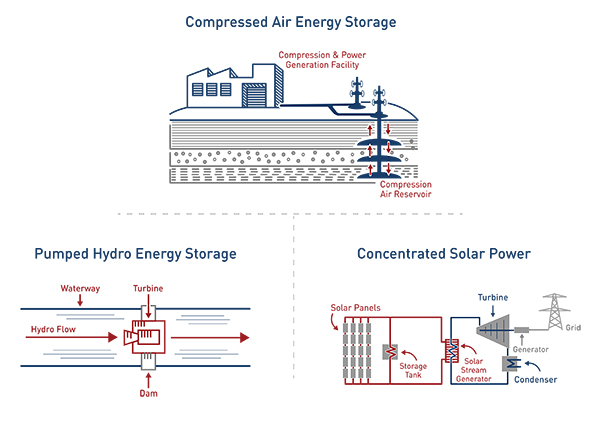
A variety of existing and advanced energy storage technologies are going to be needed to ensure reliability in fully taking on expected growth of renewables and other clean power on the grid. We detailed a few of these recently in our Intro to Energy Storage.
But we wanted to particularly highlight pumped hydro as an underappreciated option. Not only is it the most prevalent current technology by a LOT, but it could end up being cheaper and less carbon-intensive than batteries and other next-generation options.
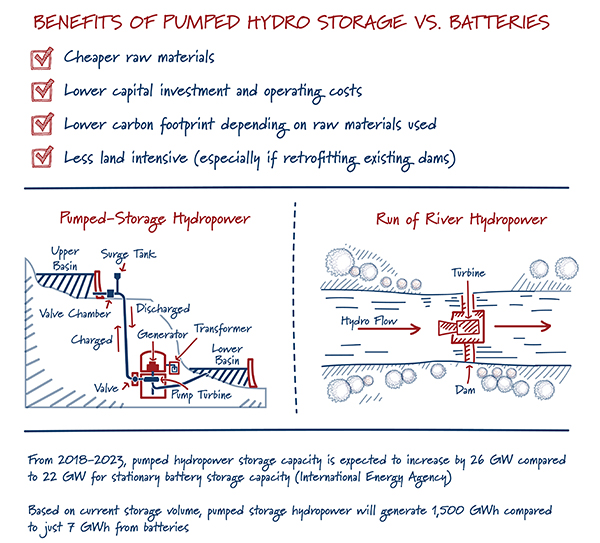
The International Energy Agency does predict that annual additions of stationary batteries are expected to overtake pumped hydro storage by 2023 due to rapid cost reductions and technology progress. But IEA also predicts that pumped hydro will increase by almost one-fifth in the next 5 years, mostly in China, which needs it for system flexibility, particularly to reduce wind power curtailment and optimize coal and nuclear plant operations.
And a group of German researchers suggested that pumped hydro could be far cheaper (particularly comparing the steel and concrete in pumped hydro vs. raw materials needed for advanced batteries), a better overall investment and even less carbon-intensive than battery cells and other storage options when comparing the possible raw materials and land needed (particularly if pumped hydro projects are part of a retrofitted existing dam).
This 2018 study was presented at HydroVision (the leading hydropower industry gathering), attracting the attention of the Department of Energy’s Office of Energy Efficiency and Renewable Energy for additional research.
Congress last year approved legislation (H.R. 2880) led by Rep. Morgan Griffith (R-Va.) that would streamline the federal licensing process that can hold up the development of pumped storage hydropower facilities. Legislation this Congress from Rep. Doug Lamborn (R-Colo.) (H.R. 537) would authorize use of Bureau of Reclamation reservoirs to expand pumped hydro storage development.
The bottom line: With all the attention on cutting-edge storage and the need to go beyond lithium ion, don’t forget about the old tried-and-true pumped hydro.
RELATED READ
|